Cleveland Sleep Guide
How to Choose a Latex Mattress: Feel, Firmness, and Layer Design
A latex mattress can feel buoyant, responsive, and distinctly different from conventional foam. But the material alone does not determine whether a bed will suit you. Firmness, layer thickness, support, and your usual sleep position all shape the experience—and the best choice is the one that balances comfortable cushioning with steady alignment.
For Cleveland-area shoppers, as for anyone comparing beds, the most useful approach is to look beyond labels. Learn how latex behaves, examine what is inside the mattress, and test the choices against the way you actually sleep.
Start with the feel, not the label
Latex is valued for a combination that can be difficult to capture in a single word: it cushions, yet pushes back. When you shift position, the surface tends to respond quickly rather than slowly molding around you. Many sleepers describe this as a springy or buoyant feel. The sensation is different from the close, gradual contouring often associated with memory foam and from the more familiar bounce of an innerspring mattress.
That responsiveness can make turning over feel easier, particularly for people who change positions during the night. It can also give the impression of sleeping on the mattress rather than sinking deeply into it. But those are tendencies, not guarantees. A soft latex comfort layer over a firmer support core may feel quite different from a firm, single-material latex design. Cover fabrics, quilting, and the mattress’s overall construction can alter the first impression, too.
Consider the feel you want before you compare specifications. Do you prefer a gently cushioned surface, or do you want to feel more lifted and supported? Do you like a bed that conforms closely to your body, or one that responds quickly when you move? These questions narrow the field more effectively than choosing a mattress because a tag calls it “medium” or “luxury firm.”
Understand what “latex” means
Latex mattresses may use natural latex, synthetic latex, or a blend. Natural latex is made from rubber tree sap; synthetic latex is produced using chemical processes; blended versions combine materials. Products described as “natural” or “organic” are not necessarily identical in composition or certification. If sourcing, processing, or particular materials matter to you, check the manufacturer’s detailed description and the scope of any certification rather than relying on a broad label.
There are two widely used methods for making latex foam: Dunlop and Talalay. In broad terms, Dunlop latex is produced through a process that often results in a denser, more solid-feeling material. Talalay latex is made using additional steps that create a more uniform, airy foam. These are useful general distinctions, but they do not establish a universal firmness ranking. Formulation, density, processing, and the way a layer is used in a mattress all matter.
Ask what the mattress’s layers are made from, where latex is used, and whether the manufacturer identifies the material as natural, synthetic, or blended. If certifications are advertised, review what they cover—such as the latex, textiles, or finished product. A clear specification sheet is more useful than an appealing but vague claim about purity or performance.
Firmness is personal—and only part of the story
Firmness describes how the surface feels when you lie down. Support describes how well the mattress helps keep your body comfortably aligned. The two are related, but they are not interchangeable. A mattress can feel plush at the surface and still have a supportive core; another can feel firm without being a good match for every body or sleep position.
There is no universal scale that makes one company’s “medium” identical to another’s. The name is a starting point, not a promise. Body weight, shape, preferred sleeping posture, and sensitivity to pressure all affect how a mattress feels to an individual. Even two people who choose the same firmness may experience it differently.
Instead of asking only, “How firm is it?” consider what the bed does in the places where you need cushioning and support. When lying on your side, do your shoulders and hips settle enough to feel comfortable? On your back, does your lower body feel supported without an uncomfortable gap or excessive sinking? On your stomach, does your midsection feel held up rather than dipping into the mattress?
These observations are more informative than a firmness number alone. If you are shopping in a showroom, spend several minutes in your usual position and try turning over. If you are ordering online, read the trial and return terms before buying. A brief lie-down can reveal an immediate mismatch, but it cannot always predict how a new mattress will feel over time.
Let sleep position guide the comparison
Side sleepers
Side sleepers often pay particular attention to pressure at the shoulders and hips. If the surface is too firm for their body, those points may feel compressed. If it is too soft or the comfort layers are too deep, they may feel as though they are sinking rather than resting in a stable position. A latex mattress with enough cushioning above its support layers may help balance relief and lift.
Try lying on your side long enough to notice whether pressure builds and whether your spine feels comfortably aligned. A mattress that feels pleasant for a few seconds is not necessarily the one that remains comfortable after a longer test.
Back sleepers
Back sleepers may look for a surface that cushions the hips and shoulders while maintaining support through the torso. The goal is not to force the body into a rigid position. It is to find a feel that provides comfortable contact without letting heavier areas sink in a way that feels strained.
Because body shape and weight distribution vary, one back sleeper may prefer a softer comfort layer while another may feel better on a firmer design. Use comfort and alignment—not a general rule about one “correct” firmness—as your guide.
Stomach sleepers
Stomach sleepers often focus on whether the mattress keeps the midsection from sinking too far. A surface that feels overly yielding may be uncomfortable for some people in this position. A steadier feel can be worth testing, though personal comfort still matters more than a category label.
Pay attention to your whole body, not just the first point of contact. If the bed feels comfortable under your chest but your middle seems to dip, compare a different firmness or layer arrangement.
Combination sleepers
People who move between positions may value latex’s quick response. A surface that recovers promptly can make transitions feel less effortful than a slower-contouring material. Still, responsiveness should be assessed alongside pressure relief and stability: a mattress that makes movement easy may not be comfortable if it is too firm or too soft for your needs.
If you share a bed, compare options together when possible. Different body types and positions can produce very different impressions of the same mattress.
Read the layer design like a map
A mattress is a system. Its top layers influence the initial feel and pressure relief, while deeper layers provide much of the underlying stability. In a layered latex mattress, the comfort layer may be softer, with firmer latex beneath it. Other designs use a latex layer over a different support material, or use several latex layers with varied firmness. The details tell you more than the word “latex” on the product page.
Look for a layer-by-layer description. How thick is each layer? What material is used? Which layer is intended to provide cushioning, and which provides the core support? If the description gives only a firmness name and a general material claim, ask the seller for more detail. Layer depth can change how much a sleeper feels the surface material versus the support beneath it.
Some mattresses use layers that can be rearranged or replaced. This can offer flexibility, especially for people who are uncertain about firmness, but it may add cost or require more maintenance. A simpler fixed-layer design may be easier to understand. Neither approach is automatically better; the relevant question is whether the construction gives you a realistic way to achieve the feel you want.
Also consider the cover and quilting. A thick quilted top may soften the first impression, while a thinner cover may make the latex’s responsive character more apparent. A mattress protector and fitted sheets can affect the surface feel slightly, so include them in your thinking—particularly if you plan to use a waterproof or heavily quilted layer.
A practical way to test a latex mattress
Shopping becomes easier when you compare a short list using the same questions. In a store, give each mattress time rather than bouncing from one to another after a few seconds. At home, follow the stated trial instructions and keep track of what you notice as you adjust. A simple note on pressure, ease of movement, and overall comfort can be more useful than trying to remember several similar impressions.
- Lie in your usual position. Give your shoulders, hips, and lower back time to settle.
- Try your other positions. If you change posture at night, see whether the surface remains comfortable as you move.
- Notice pressure and sinking. Look for comfort without the sense that a part of your body is being pushed or dropping too far.
- Check motion. If you share the bed, consider whether movement from one side is likely to disturb the other sleeper.
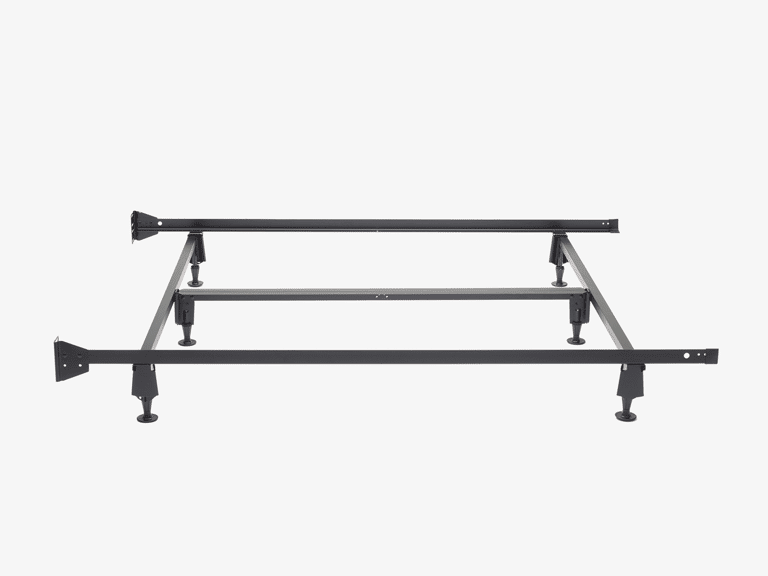
- Confirm the foundation requirements. A mattress needs an appropriate, stable base. Check the manufacturer’s specifications for slat spacing and support.
- Read the fine print. Review delivery, setup, trial, return, warranty, and any required protective-cover conditions before committing.
For an online purchase, a home trial can be especially valuable. Read its terms carefully: trial periods, pickup arrangements, fees, and return eligibility can differ. Ask how long the mattress should be used before deciding, and whether the stated trial begins at delivery or at another point in the process.
Consider the realities of a Cleveland home
A latex mattress is not selected differently simply because a shopper lives in Cleveland, but local circumstances can shape the practical side of the decision. Older homes, apartment buildings, narrow stairways, elevators, and tight turns can complicate delivery. Before ordering, measure the bedroom entrance and the route from the curb or lobby to the room. Ask whether the mattress arrives compressed, whether setup is included, and what happens if the delivery team cannot reach the intended space.
Cleveland’s seasonal changes also make it sensible to think about bedroom conditions. A mattress’s surface, sheets, pajamas, and room temperature all contribute to how warm or cool a bed feels. Latex is often described as breathable, but that does not guarantee a cool sleep for every person. Mattress covers, protectors, bedding layers, humidity, and personal temperature preferences remain part of the equation.
If possible, test the mattress with the kind of bedding you expect to use. A thick, insulating topper may change the feel and temperature more than you anticipate. A breathable protector may preserve more of the surface character, though the exact effect depends on its construction. In any case, follow care instructions and avoid assuming that a particular material eliminates the need for regular room ventilation or routine cleaning.
Natural and organic claims: ask precise questions
People exploring a natural latex mattress may be drawn to its source material, durability, or manufacturing approach. Those are reasonable things to investigate, but marketing terms can be broad. “Natural,” “organic,” and “eco-friendly” do not necessarily describe every component of a finished mattress. A product may contain latex alongside textiles, adhesives, fire barriers, or other materials.
Ask for the composition of the mattress as a whole and for documentation supporting any claims that matter to you. If a certification is listed, identify which component it applies to and what standard it verifies. Certifications can provide useful information, but they should not be treated as a blanket guarantee of a mattress’s comfort, medical suitability, or environmental impact.
People with latex allergies or significant sensitivities should consult an appropriate health professional and discuss the product with its manufacturer before buying. A description of a latex layer does not, by itself, answer every question about exposure or individual risk. Clear answers are important; if they are unavailable, consider another option.
Common mistakes to avoid
- Choosing by firmness word alone. Labels are not standardized across brands, and they cannot account for body type or sleeping position.
- Assuming all latex feels the same. Dunlop, Talalay, natural, synthetic, blended, and layered constructions can create different experiences.
- Confusing firmness with support. A soft surface can still have a supportive core, while a firm-feeling mattress may not suit every sleeper.
- Ignoring the bed base. An unsuitable foundation may affect stability, comfort, and warranty coverage.
- Overlooking return conditions. A trial is only useful when you understand its timeline, costs, and requirements.
- Expecting one material to solve every sleep issue. A mattress can influence comfort, but persistent sleep problems or pain may need professional assessment.
A concise comparison checklist
Before making a decision, write down what matters most to you and compare each mattress against the same criteria. The goal is not to find a perfect specification on paper; it is to choose a design that feels comfortable and offers dependable support in your actual sleeping positions.
- What kind of latex is used, and where is it used in the construction?
- What are the thickness and firmness of each layer?
- Does the surface cushion pressure points without allowing uncomfortable sinking?
- Does the mattress feel responsive enough when you change position?
- Are material claims and certifications clearly explained?
- Is the mattress compatible with your frame or foundation?
- Can delivery reach your bedroom, and are setup and removal included?
- Do the trial, return, warranty, and care terms fit your expectations?
The right latex mattress is the one that fits your sleep
Latex can offer a distinctive mix of cushioning and quick response, but there is no single feel that works for everyone. Firmness names are imprecise, and the arrangement of layers can matter as much as the material itself. A useful comparison starts with your preferred sleeping position, then tests whether the surface relieves pressure while the deeper construction feels steady and comfortable.
For anyone searching for a latex mattress in Cleveland, the same calm method applies: inspect the specifications, test the feel, check the foundation and delivery details, and take time to understand trial terms. Focus less on the promise of a perfect mattress and more on evidence you can assess—how your body feels when you lie down, how easily you move, and whether the design makes sense for your home and routine.
A mattress is a nightly decision made repeatedly. The most confident choice is not necessarily the most complicated one. It is the one whose materials, firmness, and layers add up to a comfortable place to rest.
Frequently asked questions
Is a latex mattress always firm?
No. Latex mattresses are made in different firmness levels and layer combinations. The surface can feel soft, medium, or firm depending on the material, its density and thickness, and what lies beneath it.
Is Dunlop latex firmer than Talalay latex?
That is a common generalization, not a dependable rule for every product. The specific formulation, firmness, and construction determine how a mattress feels. Compare product details and, when possible, test the mattress rather than choosing by process name alone.
Which latex mattress firmness is best for side sleepers?
There is no universal answer. Side sleepers often look for enough cushioning at the shoulders and hips, while still wanting the body to feel supported. Body shape, weight, and personal preference influence the right balance.
Will a latex mattress sleep cool?
Some latex designs are made to allow airflow, but sleep temperature also depends on the mattress cover, protector, bedding, room conditions, and the sleeper. No material description can guarantee a particular temperature experience for everyone.